Absorption
Glutathione Injections vs Oral Tablets: The Honest Cost, Comfort & Results Comparison
Glutathione injections and IV drips promise a fast "glow" — but at a real price in money, needles and clinic time. Here is what injectable glutathione actually costs, why so many people switch, and how modern Setria® oral tablets compare for everyday consistency.

Key takeaways
- Glutathione injections and IV drips typically cost $199–400 per session and are usually repeated weekly — the running total adds up fast.
- Injectables can deliver a large dose in one go, but they require needles, a qualified provider and repeat clinic visits, which most people struggle to sustain long-term.
- Modern Setria® glutathione oral tablets show clinically studied absorption — about 3.2× versus a liposomal reference — with a +35% rise in body glutathione stores in the Richie randomized controlled trial.
- Oral tablets cost from €0.88/day with zero needles, no appointments and easy daily consistency — and for antioxidant status, consistency tends to beat intensity.
- Any injectable should be administered by a qualified professional; unregulated DIY injectables are a genuine safety risk and best avoided.
Search "glutathione injections" and you will find a booming world of IV lounges, "beauty drips" and wellness clinics promising a brighter, more even complexion after a single sitting. The appeal is easy to understand: a concentrated dose, delivered straight into the bloodstream, with the ritual of a clinic visit. But before you book a course of sessions, it is worth looking honestly at what injectable glutathione really costs — in money, in needles, and in the time it takes to keep it up.
This guide breaks down why people seek glutathione injectable treatments, the downsides that rarely make the marketing, and how a modern oral tablet compares for people who want results they can actually sustain. If you are needle-averse or simply price-shopping, you are exactly who this article is for.
Why people seek glutathione injections and IV drips
Glutathione is the body's master antioxidant, and interest in supporting healthy levels has exploded — largely for its association with glutathione for skin radiance and overall wellbeing. Injections and IV drips are marketed as the fastest route there, and there are a few genuine reasons the format is attractive.
Speed and high bioavailability
An IV or injection bypasses digestion entirely, putting a large dose into circulation at once. On paper, that means very high bioavailability from a single session — the strongest argument in favour of the needle. For someone who wants a lot of glutathione delivered quickly, injectables do exactly that.
The "drip glow" and the clinic ritual
Part of the draw is experiential. The "drip glow" is as much about the appointment — the reclining chair, the branded clinic, the sense of doing something premium for yourself — as it is about the molecule. Many drips also combine glutathione with vitamin C and other add-ons, reinforcing the feeling of an intensive reset.
The real downsides of injectable glutathione
The marketing focuses on the upside. Here is the part that tends to get glossed over — the reasons so many people search for an alternative after their first course.
The cost adds up fast
A single glutathione IV or injection session typically runs $199–400. Because effects are transient, clinics usually recommend repeating it weekly. At even the lower end, that is roughly $800+ per month — and often far more once vitamin C, add-ons and travel are counted. Over a year, an injectable habit can cost thousands.
Needles, appointments and a provider
- Needles every time — there is no way around the injection itself, which is a hard stop for anyone who is needle-averse.
- A qualified provider is required — you cannot (and should not) safely do this at home, so every dose means booking and travelling to a clinic.
- Repeat clinic visits — the schedule only works if you keep showing up, week after week.
- Transient results — because the dose clears, the "glow" fades, which is exactly why the weekly cadence exists.
Not sustainable for most people
Put the pieces together — the price, the needles, the appointments, the transient effect — and injectable glutathione is simply hard to maintain long-term. Antioxidant support is not a one-off; it is something the body benefits from continuously. A protocol that is expensive and inconvenient is a protocol most people abandon, and an abandoned protocol delivers nothing.
Safety: needles need a professional
This is important, so we will be blunt: any injectable should be administered by a qualified healthcare professional. Injections and IVs carry real risks — infection, vein irritation, and adverse reactions — that a trained provider is equipped to manage.
For a broader look at tolerability across formats, our guide on glutathione side effects covers what to expect and when to consult a professional.
The case for modern oral tablets
The old objection to oral glutathione was absorption — early studies suggested plain glutathione was largely broken down in digestion. That critique drove people toward needles. But the science has moved on, and modern oral formats are a different proposition entirely.
Setria® glutathione: clinically studied absorption
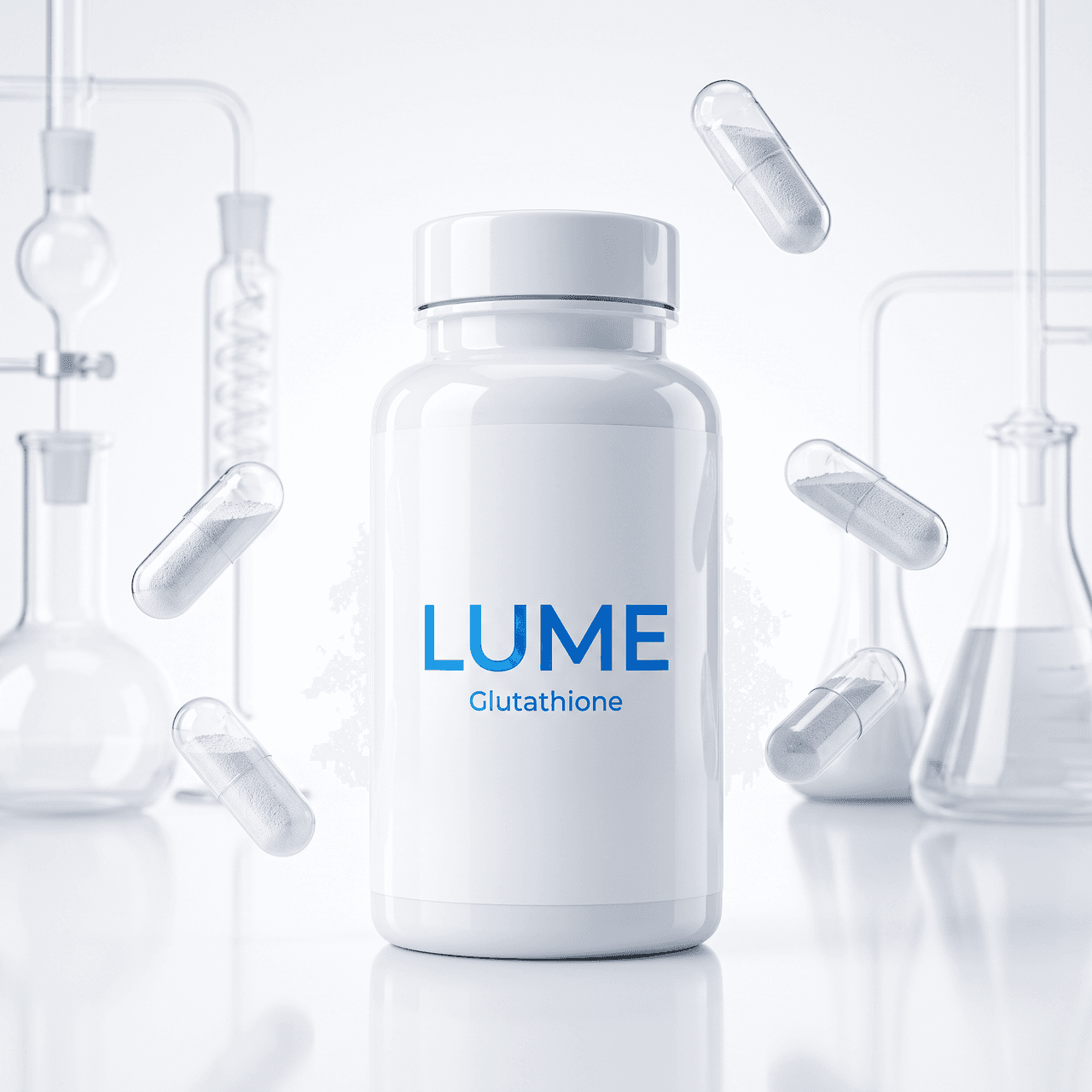
Lumé tablets use Setria® glutathione at 250 mg — a branded, clinically researched form. In head-to-head absorption work, Setria® showed roughly 3.2× the absorption of a liposomal reference, dismantling the assumption that only injections or fancy delivery systems can raise levels. And in the Richie randomized controlled trial, daily oral supplementation produced a +35% increase in body glutathione stores — not a transient spike, but a measurable rise in what the body actually banks.
For a deeper comparison of oral delivery systems, see liposomal glutathione vs tablets.
A fraction of the price, zero needles
Where an injectable course costs hundreds per session, Lumé tablets work out to from €0.88/day — pennies against a clinic drip. They pair glutathione with vitamin C, the same synergy many IV lounges bundle in, but in a form you take at home with no appointment and no needle. For a needle-averse, budget-conscious avatar, that combination is the whole point.
IV delivers more in a single session. But the dose you take every day for a year matters more than the dose you take once and skip. Sustainable beats spectacular.
— The Lumé view on glutathione formats
Injections vs IV vs oral tablets: side-by-side
Here is the honest comparison — including where injections genuinely win.
Glutathione injections/IV vs oral Setria® tablets
| Factor | Glutathione injections / IV | Oral Setria® tablets |
|---|---|---|
| Cost | $199–400 per session, usually weekly | From €0.88/day — a fraction of the cost |
| Convenience | Requires booking and travelling to a clinic | Take at home in seconds, any time |
| Needles | Yes — every single session | None — zero needles, ever |
| Absorption | Very high per session (bypasses digestion) | Clinically studied: ~3.2× vs liposomal; +35% body stores (Richie RCT) |
| Consistency | Transient; depends on repeat visits | Easy daily dosing builds steady status |
| Medical supervision | Required — professional administration | Not required — a standard food supplement |
Consistency beats intensity
This is the principle that reframes the whole debate. Glutathione is not a fireworks display; it is a baseline the body draws on every day. A single high-dose IV creates a peak that clears — impressive on the day, gone by the next. Daily oral dosing instead nudges your stores upward and holds them there, which is precisely what the +35% rise in body glutathione stores from consistent supplementation in the Richie RCT reflects.
For antioxidant status, the winning strategy is the one you keep doing. Intensity is easy to admire and hard to sustain; consistency is unglamorous and quietly decisive. A tablet you take every morning, without a clinic or a needle, is far more likely to still be part of your routine in six months than a weekly drip.
Which is right for you?
We will not pretend injections have no place. If you want the maximum possible dose in one sitting and are working with a clinic under professional supervision, an IV genuinely delivers more per session — and for a specific, provider-guided goal that may be the right call.
But for most people — especially anyone who dislikes needles, does not want to spend hundreds a week, or simply wants something they can actually keep up — the honest answer is oral. Modern Setria® tablets give you clinically studied absorption, a meaningful rise in body stores, and the one thing injections struggle with: everyday consistency, at from €0.88/day.
Frequently asked questions
- How much do glutathione injections cost?
- Glutathione injections and IV drips typically cost $199–400 per session, and clinics usually recommend repeating them weekly. That can add up to $800 or more per month, and thousands per year once add-ons and travel are included. Oral Setria® tablets, by comparison, work out to from €0.88/day.
- Are glutathione injections better than oral tablets?
- An injection or IV delivers more glutathione in a single session because it bypasses digestion. However, the effect is transient and requires repeat clinic visits. Modern oral Setria® tablets show clinically studied absorption (about 3.2× versus a liposomal reference) and raised body glutathione stores by 35% in the Richie randomized controlled trial — with daily consistency that most people find far easier to sustain.
- Can I do glutathione injections at home?
- You should not self-administer injectable glutathione. Any injection should be given by a qualified healthcare professional in a legitimate clinical setting. Unregulated injectables sold online carry real risks around sterility, dosing and product quality. If you want convenience and safety, an oral food supplement avoids the needle entirely.
- Are glutathione injections safe?
- When administered by a qualified professional in a proper clinical setting, glutathione IVs and injections are generally handled by providers trained to manage risks such as infection or vein irritation. The danger comes from unregulated, self-administered injectables. Always speak with a healthcare provider before starting any injectable protocol.
- Why do glutathione IV results fade?
- An IV creates a temporary peak in circulating glutathione that the body clears over time, which is why clinics recommend repeating sessions weekly. Daily oral dosing instead builds and maintains your body's glutathione stores steadily — the +35% increase seen in the Richie RCT reflects that consistent, banked rise rather than a short-lived spike.
- Is oral glutathione worth it if injections absorb more?
- Yes, for most people. Injections win on dose per session, but oral daily dosing wins on what actually matters over months: consistency, cost and comfort. For antioxidant support, the routine you can keep doing beats the intense one you abandon. Setria® tablets deliver clinically studied absorption at from €0.88/day with zero needles.
Keep reading
Liposomal Glutathione vs Tablets: Which Absorbs Better?
Liposomal was the absorption king — until Setria® tablet data showed 3.2× higher uptake. The comparison, with numbers.
Glutathione for Skin: Brightening, Dark Spots & the Glow
How the master antioxidant evens tone and fades dark spots — the 12-week clinical results behind glass skin.
Glutathione Side Effects: What 12 Weeks of Trials Report
Is daily glutathione safe? Placebo-controlled trial data, who should skip it, and the honest risk profile.
Dr. Elena Marchetti — PhD, Antioxidant Biochemistry — Lumé research desk
Elena holds a doctorate in redox biology and writes the Lumé glutathione library, translating clinical trial data into plain-language skin and wellness guidance.
Medically reviewed by Dr. Priya Nandakumar, PharmD. This article is for education only and is not medical advice. Food supplement — not intended to diagnose, treat or cure any condition.