Foundations
Glutathione for Skin: Does It Actually Work for a Brighter, More Even Tone?
You've seen the before-and-afters. Here's the honest, evidence-first answer on how glutathione supports brighter, more even-looking skin — what to realistically expect, and why the way you take it changes everything.

Key takeaways
- Glutathione is your body’s master antioxidant — it helps neutralize the free radicals that leave skin looking dull, tired and uneven.
- It gently influences the melanin pathway toward a brighter, more even-looking tone — supportive and cosmetic, not skin-bleaching.
- A 12-week clinical trend (Weschawalit et al., 250 mg oral daily) showed brightening and more even tone — individual results vary.
- Most topical creams struggle because the skin barrier blocks the active — it was never your skin, it was the route in. Oral delivery works from the inside out.
- The multipliers are daily consistency, vitamin C alongside, and sunscreen — without them, even the best formula underdelivers.
If you’ve scrolled past a glowing before-and-after and thought okay, but does glutathione really do anything for skin, or is it just another pretty bottle? — this is the honest version. No hype, no promises of overnight transformation. Just how it works, what the research actually says, and why the results you’ve heard about often come down to one overlooked detail: the way it’s taken.
Glutathione has quietly become the ingredient women reach for when they want brighter, more even-looking skin and want the look of dark spots to fade — without harsh acids or a ten-step routine. But it’s widely misunderstood. So let’s start with what it genuinely is.
What glutathione actually does for skin
Glutathione is a small molecule your body makes naturally in every cell. It’s often called the master antioxidant — not marketing shorthand, but because it sits at the center of how your cells defend and repair themselves, and even helps recycle other antioxidants like vitamin C and vitamin E so they can keep working.
Why does that matter for your face? Because a lot of what reads as dull, tired, uneven skin is oxidative stress — the daily toll of UV, pollution, stress and time generating free radicals that damage skin cells and dim your natural glow. Glutathione helps neutralize those free radicals. Support that process, and skin tends to look fresher, clearer and more luminous over time.
This antioxidant role is the foundation of nearly every other benefit people talk about — we go deeper in the glutathione benefits guide. But the reason it went viral is more specific: tone.
The melanin pathway: how tone becomes more even
Here’s the mechanism, explained honestly. Your skin colour comes from melanin, made by cells called melanocytes. But melanin isn’t one thing — there are two main types:
- Eumelanin — the darker, brown-black pigment responsible for deeper tones and the concentrated patches we see as dark spots.
- Pheomelanin — the lighter, red-yellow pigment associated with a softer, more luminous tone.
Glutathione appears to gently nudge this pathway — both by influencing the enzyme (tyrosinase) that kicks off pigment production and by shifting the balance from darker eumelanin toward lighter pheomelanin. In plain terms: the skin’s pigment mix leans toward the lighter, more even end of your own natural range.
That’s the key nuance so many articles get wrong. It’s not bleach and it’s not stripping colour out. It’s evening out — softening the concentrated spots, calming patchiness, and letting your skin look more uniform and lit-from-within. Brightening, not whitening.
The goal was never a different face. It was my face, more even — the dark spots softer, the tone finally matching itself.
What the 12-week research shows
This is where glutathione earns its reputation instead of borrowing it. In a well-known randomized controlled trial, Weschawalit et al. gave healthy women 250 mg of oral glutathione daily and tracked their skin over 12 weeks. The trend: measurable brightening and a more even tone, alongside improvements in skin elasticity and less visible wrinkling. It’s one of the clearest signals we have that oral glutathione can influence how skin looks — not just how it feels.
Two honest caveats. First, individual results vary — a trial reports averages, not a promise for any one person. Second, glutathione supports a cosmetic outcome (radiance and evenness); studies suggest a real effect, but it is not a medical treatment for any skin condition. If you have a specific skin concern, that’s a conversation for a professional.
What the research does reframe is the number that matters. Twelve weeks. A steady 250 mg daily. That’s the shape of a real result — and it’s why the route you choose to hit that dose is everything.
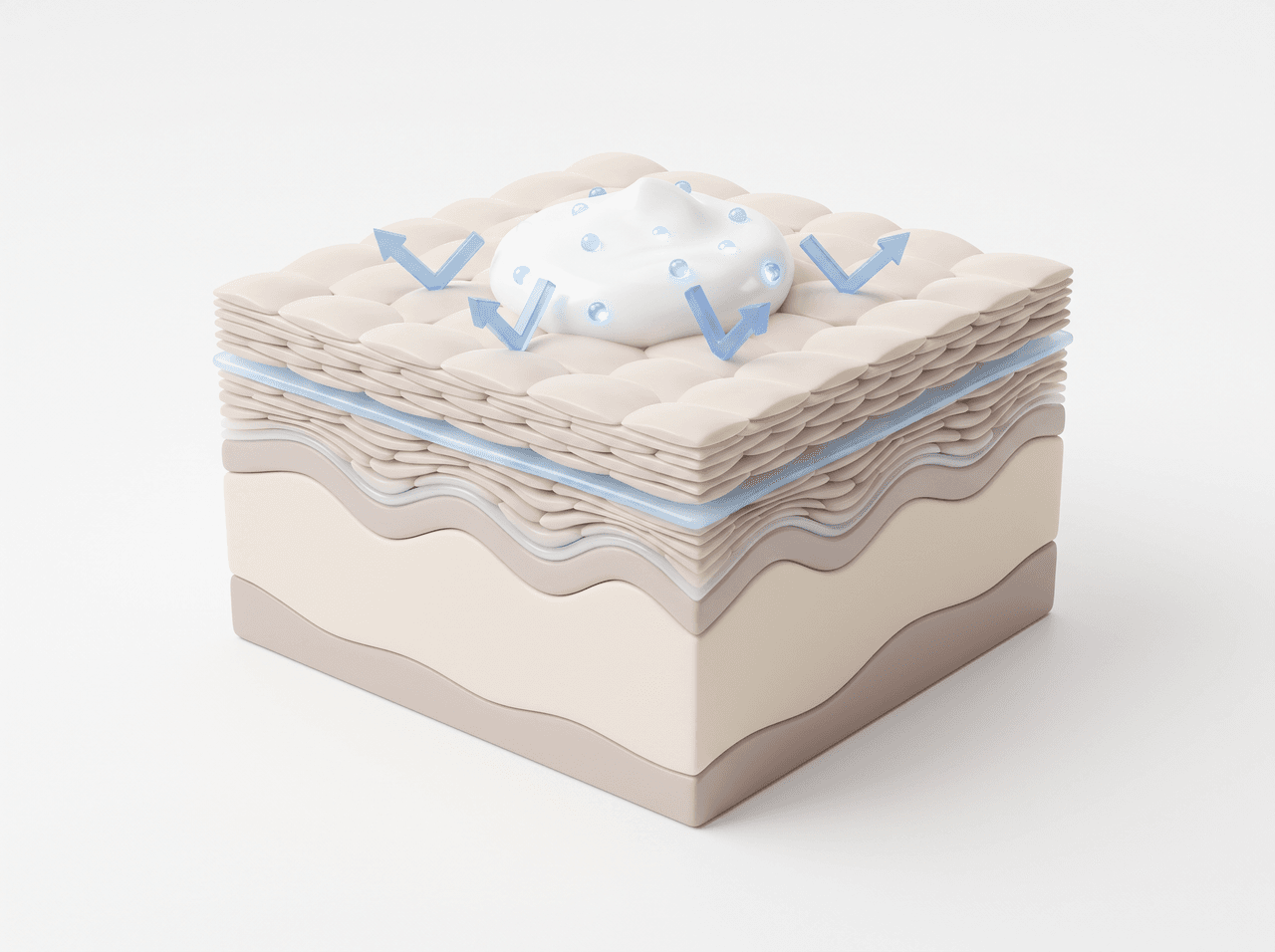
Why creams disappoint (it was the route in)
Almost everyone starts with a topical — a glutathione cream or serum — and quietly gives up a few weeks later, assuming their skin just doesn’t respond. Here’s the reframe that changes everything:
This single fact explains a lot of frustration — and a lot of expensive IV clinics. To guarantee delivery, some clinics push glutathione straight into the bloodstream by drip, at roughly $199–400 per session, repeated over weeks. Effective route, punishing price. We break down that trade-off in glutathione injections vs oral tablets.
The good news: you don’t need a needle or a barrier to bypass the barrier. You go around it — from the inside.
Why oral delivery + 250 mg + vitamin C matters
Oral glutathione works from the inside out — it travels through your system to reach skin cells the way your body was designed to distribute nutrients, no barrier to fight. But not all oral glutathione is equal, and the differences are the whole game.
The form: Setria® glutathione
Lumé uses Setria® glutathione at 250 mg — the same clinically-studied dose and identical structure to the glutathione your body already makes. A separate RCT (Richie et al.) linked sustained Setria® supplementation to a +35% rise in the body’s glutathione stores — evidence it genuinely lifts your levels rather than passing straight through.
The absorption: why not liposomal?
Liposomal glutathione is often sold as the premium absorption story. In head-to-head terms, the Setria® approach has shown roughly 3.2× the effective delivery of a typical liposomal product — more of what you pay for actually reaching your cells. Full comparison in liposomal glutathione vs tablets.
The partner: vitamin C
Glutathione and vitamin C work as a team — vitamin C helps regenerate glutathione back to its active form, so the two together outperform either alone for supporting brightness and even tone. That’s why glutathione + vitamin C is the pairing worth looking for, and it’s built into the Lumé glutathione tablets.
Ways to take glutathione for skin — a quick honest comparison
| Route | Reaches skin cells? | Rough cost | Reality |
|---|---|---|---|
| Topical cream | Mostly blocked by barrier | Varies | The active can’t get in |
| IV drip | Yes, direct | $199–400 / session | Effective but costly & clinical |
| Oral Setria® 250 mg | Yes, from the inside out | from €0.88 / day | Clinically-studied, everyday-simple |
That last line is the quiet headline: a clinically-studied route to brighter, more even skin from €0.88 a day — versus a few hundred dollars a clinic visit.
What to expect, week by week
This is where honesty matters most, because glutathione is a consistency ingredient, not a filter. The timeline below is typical and illustrative — a realistic shape based on the 12-week research arc, not a guarantee. Skin, lifestyle and starting point all shift the pace, and individual results vary.
- 1Weeks 1–4 — the quiet phase. Little to see in the mirror yet. Inside, your glutathione stores are building and your antioxidant defenses are topping up. Trust the process; this is the groundwork.
- 2Weeks 4–8 — the first glow. This is where people start to notice: skin looks fresher, a little brighter, more awake. Tone begins to read as more even — subtle, but real, and usually the first thing a friend comments on.
- 3Weeks 8–12 — tone & spots. The stretch the research is built around. Overall tone looks more even and luminous, and the look of dark spots and patchiness continues to soften. Most people are photographing their skin, not filtering it, by now.
- 4Beyond 12 weeks — maintenance. Glutathione supports skin while you take it consistently. Keeping the daily habit (with sunscreen) is how you hold and build on the glow, rather than watching it drift back.
The multiplier: sunscreen & consistency
You can do everything right and still stall on one thing: sun. UV is the single biggest driver of the dark spots and uneven tone you’re working to fade. Taking glutathione while skipping SPF is like bailing a boat without plugging the leak.
- Wear broad-spectrum SPF daily — even indoors-heavy days and winter. It protects the progress glutathione is making and stops new pigment from forming.
- Take it consistently, same time daily — steady levels beat occasional big efforts. A habit stacked onto your morning routine is what carries you to week 12.
- Pair with vitamin C — for the regeneration effect that keeps glutathione active.
- Support it with the basics — hydration, sleep and a gentle routine all reduce the oxidative load glutathione is helping to clear.
Consistency plus sunscreen is the multiplier that turns a good supplement into visible, hold-able results — and the difference between the reviews that rave and the ones that shrug.
Is it right for you?
If your goal is brighter, more even-looking skin, a softer look to dark spots, and that lit-from-within glow — without acids, needles, or a clinic budget — oral glutathione is one of the most sensible, evidence-backed places to start. It’s the everyday route to the outcome IV clinics charge hundreds for.
Glutathione is well-tolerated for most people as a food supplement; you can read the honest rundown in glutathione side effects. As with any supplement, if you’re pregnant, breastfeeding, or on medication, check with your doctor first.
If that sounds like the glow you’re after, the Lumé glutathione tablets pair Setria® 250 mg with vitamin C in the clinically-studied daily dose — the simple, honest route to brighter, more even skin. Give it the full 12 weeks. Wear your sunscreen. Let your skin catch up to itself.
Frequently asked questions
- How long does glutathione take to work on skin?
- For most people, subtle changes begin around weeks 4–8, with more visible brightening and a more even tone in the 8–12 week window — the timeframe the main clinical research is built around. The first few weeks are quiet while your body builds up its glutathione stores, so consistency through at least 12 weeks matters. This is a typical, illustrative timeline and individual results vary.
- Does glutathione lighten skin permanently?
- No — and it’s important to be honest about this. Glutathione supports a brighter, more even-looking tone and helps fade the look of dark spots by gently influencing your natural melanin balance. It is not a permanent bleaching treatment. The supportive effect is maintained while you take it consistently; if you stop, your skin gradually returns toward its natural baseline over time.
- Is glutathione safe for skin?
- Glutathione is a molecule your body makes naturally and is generally well-tolerated as an oral food supplement at studied doses like 250 mg daily. It is a cosmetic and nutritional support rather than a drug. As with any supplement, if you are pregnant, breastfeeding, taking medication, or have a medical condition, it is best to check with a healthcare professional first.
- Is glutathione for skin whitening or skin brightening?
- It is best understood as brightening and tone-evening, not whitening or bleaching. Glutathione nudges the pigment pathway from darker eumelanin toward lighter pheomelanin, so your tone leans toward the more even, luminous end of your own natural range. It softens dark spots and patchiness rather than stripping colour — the result is your skin looking more even, not a different complexion.
- Why don’t glutathione creams work as well as tablets?
- Your outermost skin layer, the stratum corneum, is a barrier designed to keep things out — and glutathione is a large, water-loving molecule it’s especially good at blocking. So most of a topical never reaches the melanocytes where skin tone is decided. Oral glutathione sidesteps the barrier entirely by working from the inside out, which is why tablets typically outperform creams for tone.
- What dose of glutathione is best for skin, and does vitamin C help?
- The most-studied dose for skin brightening is 250 mg of oral glutathione daily, taken consistently — the amount used in the 12-week trial that showed a more even tone. Pairing it with vitamin C helps, because vitamin C regenerates glutathione back into its active form, so the two together support brightness and even tone more effectively than either alone.
Keep reading
Glutathione Benefits: What the Research Actually Shows
Brighter skin, antioxidant defense, energy — the evidence behind the master antioxidant, study by study.
Glutathione Injections vs Oral Tablets: Cost, Safety & Results
$199–400 per IV session vs €0.88 a day — what needles actually buy you, and what they don’t.
Glutathione Side Effects: What 12 Weeks of Trials Report
Is daily glutathione safe? Placebo-controlled trial data, who should skip it, and the honest risk profile.
Dr. Elena Marchetti — PhD, Antioxidant Biochemistry — Lumé research desk
Elena holds a doctorate in redox biology and writes the Lumé glutathione library, translating clinical trial data into plain-language skin and wellness guidance.
Medically reviewed by Dr. Priya Nandakumar, PharmD. This article is for education only and is not medical advice. Food supplement — not intended to diagnose, treat or cure any condition.